PAPER · VOL. 000
Information,
Finished.
Preparat per a
Oriol Farràs
Cicle 000 · Juliol 2026 · rescatat d'un backlog de 1.049 peces i 83 hores
Índex
En aquest número

Les peces d'aquest número

Total ≈ 38 minuts de lectura. Es comença, s'acaba, es tanca.

Obertura
L'editorial del curador

Del teu soroll, això

Esborrany del curador — reescriu-me amb la teva veu o esborra'm

Nou peces rescatades de 1.049. El fil del cicle: sistemes que s'aguanten sols: el compounding, el focus com a múscul, una wiki que es manté sola, i el sistema que ets tu (bucles, postura, ambivalència). Nota de curador per decidir: hi ha DOS Dan Koe en aquest número perquè tots dos esperaven a la pila; si et sembla massa d'una sola veu, el segon torna al pool i no passa res: l'evergreen no caduca.

— Per què aquest número, en dues línies teves —
1 min

X · @thebeautyofsaas · EN · post complet

Guardada · dimarts 30 juny 2026 · read-later · via WhatsApp

Compounding com a avantatge injust

everything you need to know about how to start using compounding as an unfair advantage over others

"slow progress" + regular audits (honesty required) + focus on a single area of your life > casino culture type thinking (treating everything as a jackpot and lottery ticket)

— El que em quedo —
11 min · íntegre

thedankoe.com · Dan Koe · EN · text complet des de la font original (CTAs finals fora) · 2.449 paraules · 7 figures

Guardada · diumenge 1 març 2026 · read-later · 134 dies esperant a la pila — la peça més veterana del número

How I Unlock Insane Focus On Demand

Block out 1 hour a day.

Work on 1 meaningful project.

Aim for 1 vision for your future.

Take it 1 day at a time.

You don’t need more motivation, you need more clarity.

You don’t need more time, you need more focus.

This letter will teach you to unlock insane focus on command.

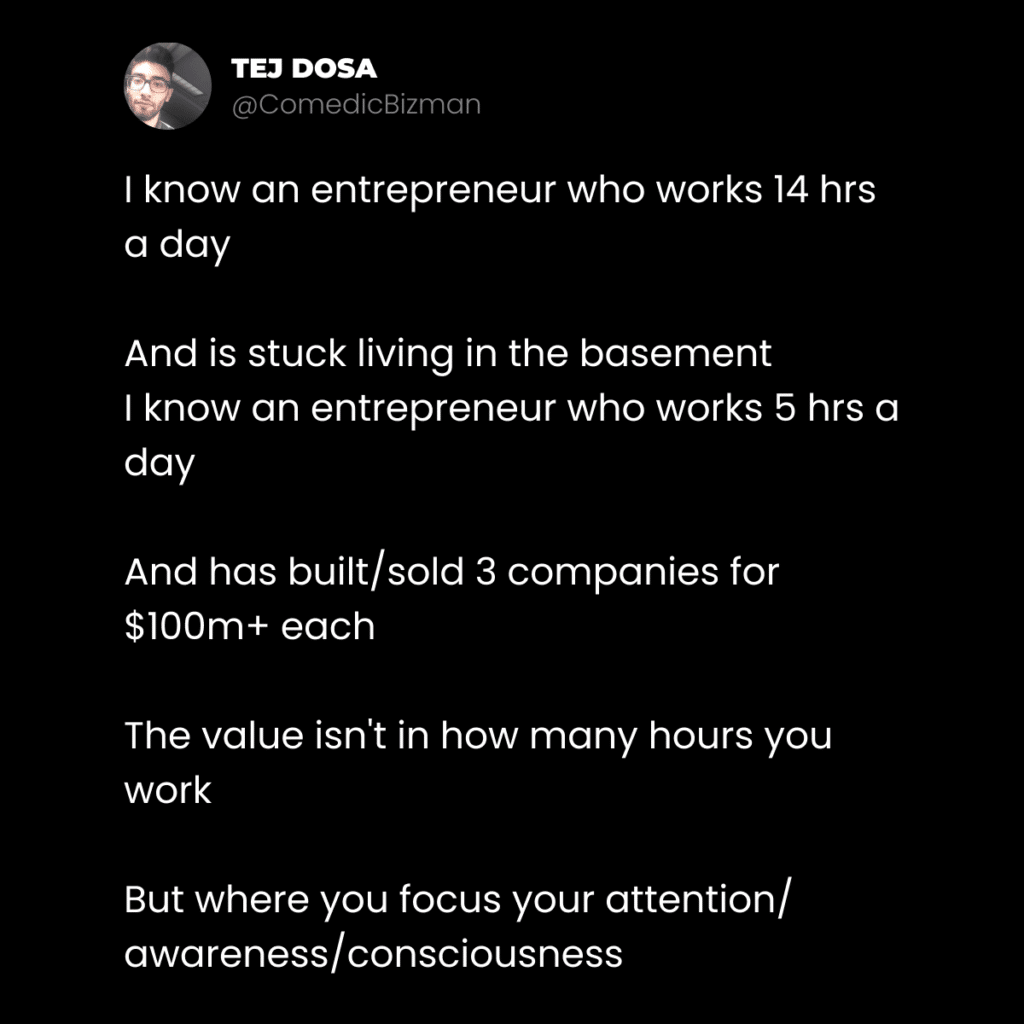
Most people think they need to work like a millionaire to achieve their goals.

But most people don’t understand how most millionaires work.

Two examples:

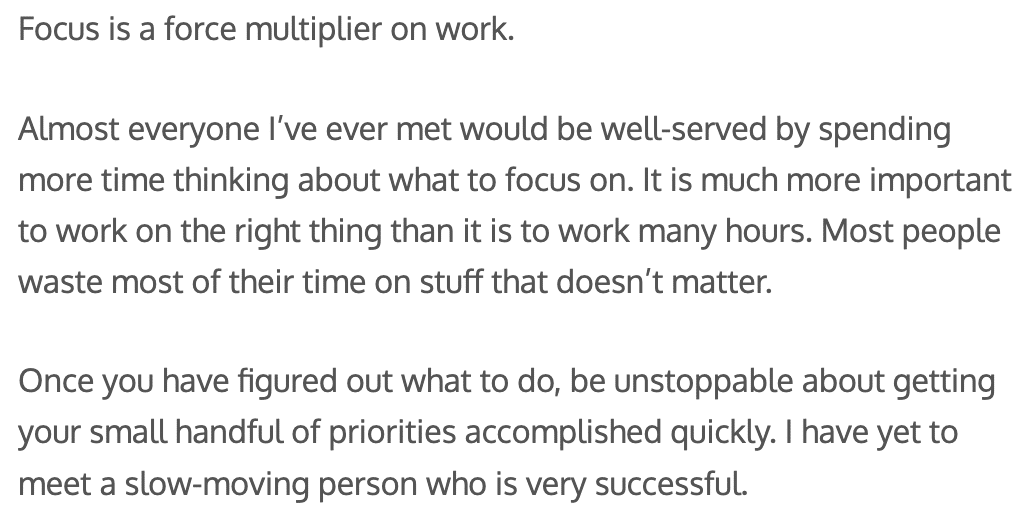
The first, Sam Altman from OpenAI
Second, Tej Dosa. A low-key copywriter who writes great X content:
Third, myself.

So no, you don’t need any more time than you already have.

Everyone starts somewhere. People don’t start with a fake millionaire routine. They start with what they have.

Aside from building new projects, I’ve rarely worked more than 4 hours a day.

Especially when I was starting out and had other responsibilities.

I had 1-2 hours a day and a bit more on my days off.

The entrepreneurs who work more make that choice, often at their own psychological expense.

Productivity is like fitness and you wouldn’t train 8 hours a day with no food or sleep and expect to make progress.

There are 2 types of work:

  1. Building – when you are building the foundation of something new. Like a product, service, or brand. This requires a lot of upfront work.
  2. Maintenance – when you are fueling the foundation you’ve built with a streamline productivity system. Like writing content, marketing yourself, building an audience, or fulfilling on your product or service. This requires 1-4 hours a day depending on your skill level or choice of work.

People trying to change their life or quit their job often get discouraged at the amount of work it takes to build.

They can’t zoom out and realize that once it’s built, your work decreases drastically.

Focus compounds.

You become better at what you do with time.

Like learning to walk, it’s difficult at first. It takes more time to walk from where you are to where you want to be.

But as you try, fail, and let your self-corrective mind rewire new neural pathways you can walk there as fast as you want… or just sprint.

If you want my complete philosophy for focused living, grab my book The Art Of Focus.

Focused work is only one part of changing your life.

Your Mind Is A Supercomputer Running The Game Of Life

Your mind is a supercomputer.

Your attention is the RAM.

Thoughts, regrets, and tasks are the programs slowing your performance.

Writing, mindfulness, and focus are the reboot you can access at any time.

RAM — or “random access memory” — is one of the most important parts of a computer, it determines performance.

The more RAM you use up with different programs running, open browser tabs, and the performance requirements of what you have running, the slower your performance will be.

This is no different from your focus, what you hold in your conscious attention.

Humans can process 50 bits of information per second. That adds up to 125 billion bits of information in your lifetime.

Most people live with multiple high-demand programs running that are draining the limited creative energy they have.

The list goes on and on.

The modern mind has its attention split in infinite directions by default.

We go about our lives stressed and near sickness. Rather than living in the present with singular focus and a worry-free mind, we are the opposite. Living in a false reality created by split attention.

When we hold too much of the past or future in the contents of our consciousness, chaos ensues. The mind tends toward disorder. If not kept in check, we lose the sense of control over our lives that leads to enjoyment. This is accomplished through controlled consciousness.

Psychic Entropy: The Danger Of Distractions
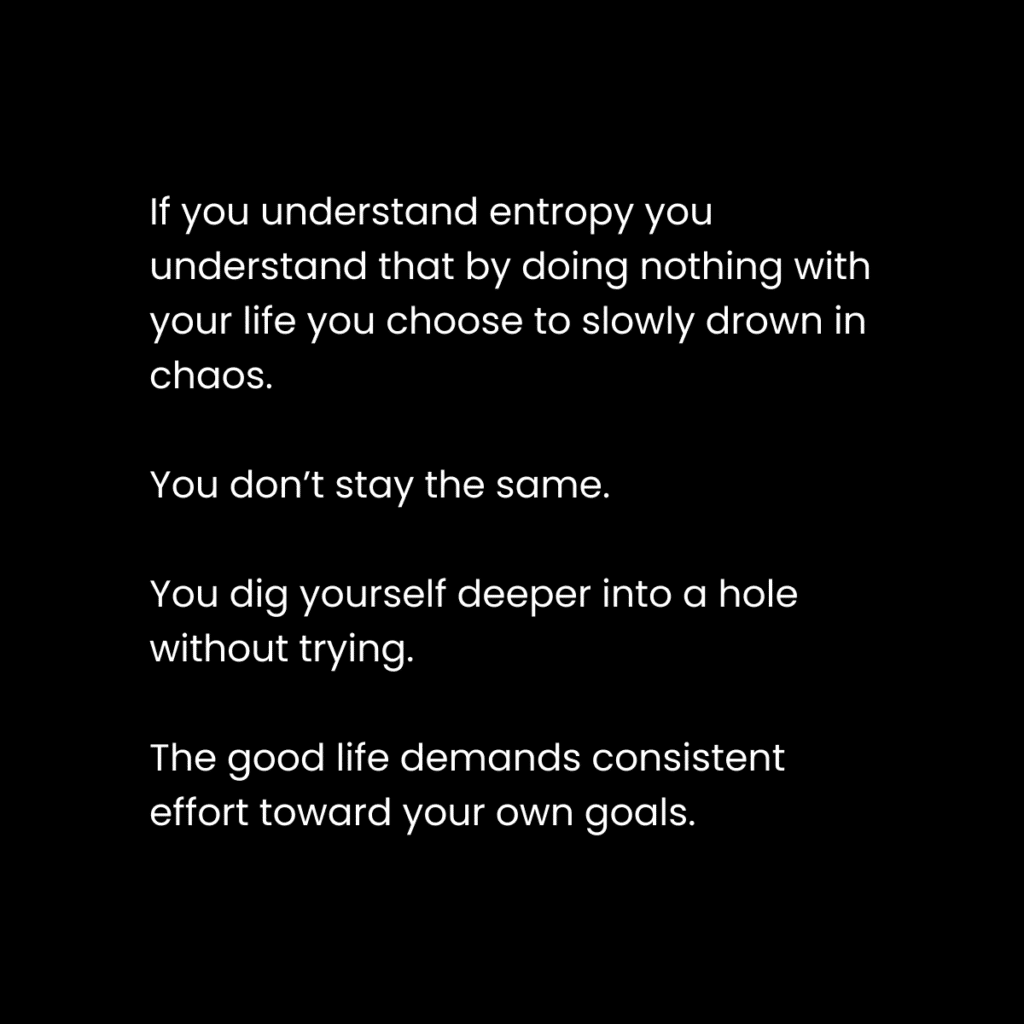
Entropy is the supreme law of the Universe.

Without getting too complicated, if you don’t attempt to maintain order in a system by putting energy into solving problems, that system will decline into chaos.

If you don’t put effort into maintaining your bookshelf, books will end up all over your house, at your friend’s house, and small-scale chaos will ensue.

If you don’t put effort into the system of cleaning your room, it will slowly get dirtier and dirtier until you live in a disgusting nest of filth.

This is the state of most people’s minds.

A disgusting nest of filth.

Psychic entropy is the natural process of your psyche (or mind) tending toward chaos and disorder.

You aren’t productive because you don’t have clarity.

You aren’t productive because you focus on one distraction, don’t correct yourself, and slowly become overwhelmed by the chaos in your mind.

Distractions are the problems in your productivity system that must be solved if you want to unlock laser focus.

There are 2 ways to identify distractions and correct yourself:

Boredom and anxiety.
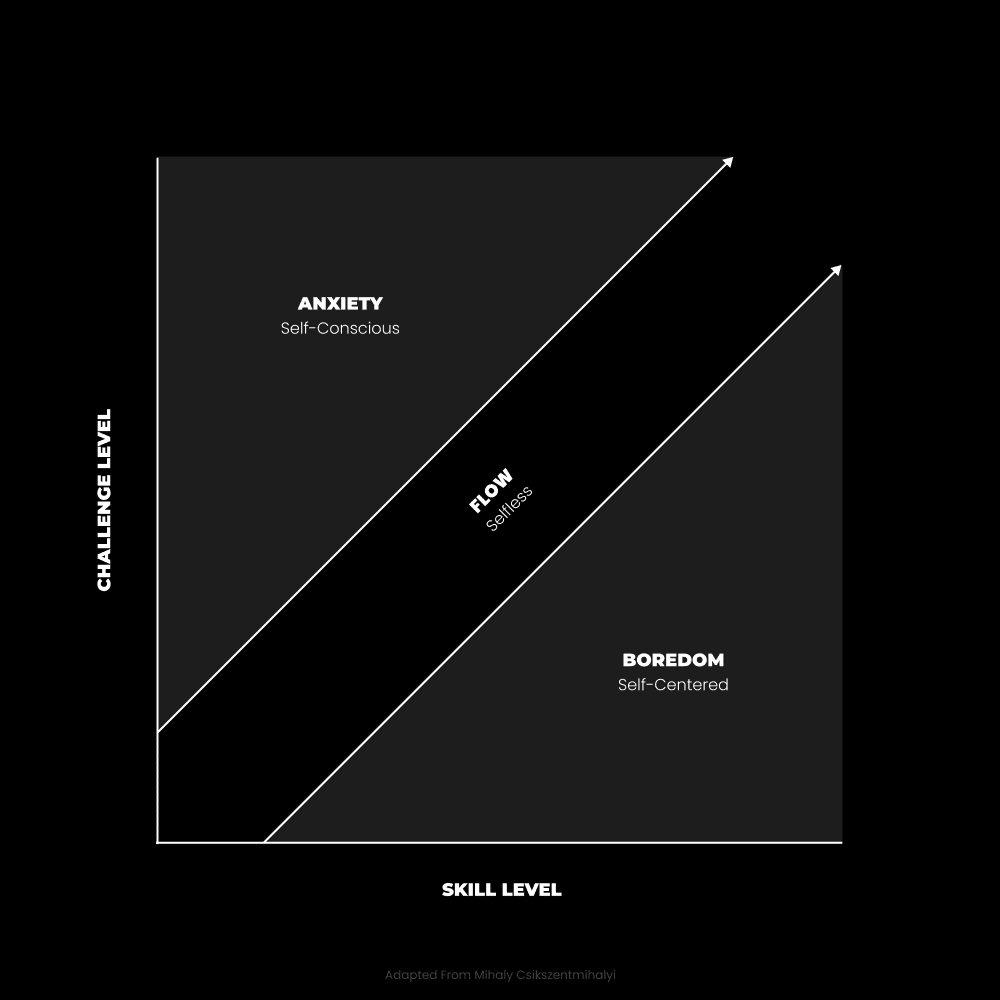
If the challenge of the task you are completing is too low for your skill level, you will get bored.

If the challenge of the task you are completing is too high for your skill level, you will get anxious.

The boredom stems from self-centeredness.

Your focus breaks, a new desire pops into your head, and related thoughts start to fill your attention.

If you are bored of the task, you will start thinking of better things you could be doing.

The anxiety stems from self-consciousness.

Your focus turns inward and negative thoughts flood your mind about how you aren’t good enough.

If you look in the mirror and spot a pimple, that is going to be on your mind for the rest of the day. It will impact every other area of your life.

The RAM of your mental supercomputer will be consumed by rogue programs until your performance suffers as a whole.

The chaos induced by boredom or anxiety can only be cured with clarity.

You must refocus your mind not only on the task in front of you, but on the ideal outcome of your life as a whole.

When you have the skill and knowledge that matches the challenge of a task, life becomes a video game of quests that you love to play.

The 4-Hour Workday – Creating Your Productivity System

Humans find meaning in stories.

Humans love playing games.

Why?

Because they present a clear hierarchy of goals that our mind can adopt as an indistractable frame.

They follow the curiosity > intensity > consistency cycle of the Universe.

First you’re lost. Then you’re curious. Then you’re obsessed. Then it’s a consistent part of your life with little extra effort.

Most people get lost, focus on distractions, and never put effort into a goal (even if they don’t see the meaning in it yet) to reverse the hole they’re digging themselves into.

Understand that nothing is perfect.

Like a story, you will experience lows, but those are what allow the highs to exist. Success doesn’t exist without failure.

Like a video game, you will have to progress from beginner to advanced by completing a series of quests to level up. It will take time.

If you want maximum enjoyment and focus in your work, these guidelines will help you create a hierarchy of goals for your productivity system.

The longer you stick with it, the more potent it becomes.

Identity – Solving Productive Problems

Ever since I can remember, I’ve always had the goal of working 4 hours a day.

A 9-5 job was the bane of my existence.

Over time, this perspective shaped my identity.

I was attached to that desire.

Most people tell you desire is bad, but in my eyes, it’s only bad if the desire is bad.

Your goals are the axis of your suffering, and you get to choose what you suffer for.

Perspective is everything.

It allows you to identify problems and opportunities that (when solved) result in achieving the goal of that perspective.

It was an automatic decision to get to where I am today.

Anything that threatened my 4-hour workday was noted as a problem.

I was able to spot opportunities like social media, digital products, and audience building to solve those problems.

Most people have an identity and perspective shaped by society, with the goals of society, so they never identify and solve problems that lead to abnormal results.

Project – Building Out Your Potential

Your identity is shaped by your vision for the future.

Your vision is the all-encompassing goal you are pursuing in your life. It is at the top of your hierarchy. Everything falls under it.

Now, you need a project that will move the needle toward that future.

You need something to build that will expose you to problems you must solve.

You need clarity for your work so you have something to anchor your attention.

And if you read the last letter, you understand that building a project is the best way to learn new knowledge and skills.

  1. Create an outline – braindump everything you know that should be built in the project. You will add to this outline as you build.
  2. Create milestones – break the project down into manageable goals you can achieve in 1-4 hour work sessions depending on your current responsibilities.

What should your project be?

I can’t tell you that.

But it should probably be a business as that’s the vessel for your purpose. It is the catalyst for the good life that breaks you out of robotic living. Entrepreneurship is modern survival, and your psyche is wired to hunt. You aren’t meant to be a monkey in a cubicle.

Along with that, your health and relationships are important projects that enhance your business results.

Deadlines – The Procrastinators Edge

You aren’t productive because you aren’t public.

Another point for building an internet business on social media. The flow-state requirement of challenges and deadlines is baked in.

When I set a launch date for a product and accept pre-orders, once the first person pays, I have to build the product before the deadline.

It doesn’t matter how good or bad it is.

I can improve it after the fact that it’s actually out and I did something with my life.

Another thing:

Procrastination isn’t bad. It’s human nature.

Most successful entrepreneurs are lazy.

They wait until the last minute to get work done.

But during that last minute, they enter the most enjoyable season of their lives. Their mind becomes a magnet for ideas. Their best work happens in these periods of obsession and intensity.

They don’t have a choice, their survival is at stake.

Timeblocks & Breaks – Managing Your Focus

Focus is a muscle, and success is reserved for those who train it. – The Art Of Focus

Identity, projects, and deadlines narrow your attention.

Timeblocks take that one step further, making it easy to get into flow.

Set a timer for 45-90 minutes.

Focus with intensity.

Then, take a break.

Go on a walk. Eat. Watch some YouTube. Play a video game. I don’t care what you do.

Your focus is finite. You need to take rest between your sets.

Personally, I write for two 60 minute time blocks. That is what builds my entire business.

Leverage – Doing The Right Things

I’m going to save you a lot of pain:

Choose a career that allows for a 4-hour workday.

Start a one-person business. Become a value creator. Use the internet to do what you love.

Learn the skills that allow for this.

Evolution is the process of solving problems that reverse entropy.

Labor work and long work days are a massive problem. People hate it. So, social media, the internet, and artificial intelligence were born.

AI will solve the problem of overwork. Potentially in this lifetime (especially if we solve the problem of aging).

Now, your work sessions for the day should consist of 3-9 lever-moving tasks that build out your project.

Some people can handle more, some less. I help you structure this in the FOCI planner.

Routine – Becoming Efficient

You have a routine.

Even if your routine is “no routine.”

We discuss this in The Daily Routine That Changed My Life.

Routines are how you condition your mind to run on new systems.

If you want to solidify a new identity, you must start, refine, and stick to a routine.

For the first month, building your project will feel uncomfortable.

You’re supposed to feel overwhelmed. It means your mind is expanding into a new identity.

Slowly, then all at once, everything flows with ease.

You begin making exponential progress.

You move from intensity to consistency and let the results compound.

Rest – The Secret Of The Greats

“The clever man may work smarter, not harder, they say, but the creative man doesn’t work at all.” — Alex Soojung-Kim Pang

I’ve always had some form of aversion toward Western work culture.

It never seemed “right” to me.

Why would I want to waste my entire day, knowing that 2-3 hours in my work quality would suffer?

This has been a talking point for a long time now. I believe it has started to shape the creator economy and remote work.

Ancient Romans, Ancient Greeks, Steve Jobs, Charles Darwin, and an infinite list of visionaries, strategists, and innovators attributed their success to surprisingly low “work” times.

Writers from multiple domains, like Hemingway and Tarantino, would spend the majority of their days lounging by the pool, spitting game with girls, and doing everything aside from what they deemed “work.”

Work for 1-4 hours.

Then, stop.

This is arguably the most difficult part of your day.

At the end of my work sessions I go to the gym as a “transition” into rest.

This allows the Default Mode Network to kick in. My subconscious begins to munch on problems related to the work.

When I get back to my morning focused work, I have the rest and creative resources needed to make those 4 hours more potent than those fatiguing their mental muscle beyond belief.

I hope you enjoyed this letter my friends.

Dan
— Les teves notes —
«Lack of focus is a form of cowardice. You don't believe in yourself enough to go all in.»
— @AlexHormozi · guardada el divendres 3 de juliol, un dia que només vas desar dues coses
9 min · íntegre

thedankoe.com · Dan Koe · EN · text complet des de la font original (P.S. promocional fora) · 2.183 paraules

Guardada · diumenge 5 juliol 2026 · read-later · el segon Koe del número: tots dos esperaven

The Greatest Skill Of The 21st Century

I’m going to be honest.

Myself and Justin Scott are having a newsletter writing competition.

We set out to write 7 newsletters in 7 days to have a backlog.

I even took it a step further and have been recording 7 YouTube videos day by day.

Today’s writing fell on a busy day, I was preparing Sprint curriculum calls.

So… I copy pasted this directly from Digital Economics (it’s less than 1% of what’s in there).

In my eyes, it is one of the most important skills you can master: persuasive communication.

That way, people actually share your writing (meaning you actually grow on social media).

As a bonus, I’ve included a download link to a PDF (no email required) with what we discuss in this letter.

Open this PDF in another tab so you don’t lose it.

I would highly encourage you have it open while writing content.

It includes the 10 Koemmandments of Engagement and 32 post structures you can emulate – my personal swipe file.

Let’s dive in:

People don’t remember what you say, they remember how you make them feel.

This is worth repeating:

Humans are emotional beings, not logical.

99% of the population have not developed themselves to the point of being free from — or in control of — their ego.

That is the foundation of capturing and holding attention.

Poking your reader’s ego.

Feeding it = making them feel “good.”

Starving it = making them feel “bad.”

If you can take people on an emotional journey of love, hate, excitement, deceit, calmness, and any other emotion that eventually ends in a benefit for their life — you have mastered the art of content creation.

Life is story.

Song is story (Uni-verse, one song).

Architecture, music, plant life, and everything else follow the Universal principles of highs/lows creation/destruction growth/death etc.

Humans make sense of the world in stories.

Your job is to use the power of word to make people feel something.

Stories mimic the natural highs and lows of emotion.

Before we start:

The Art Of Focus (my book) is available for pre-order.

(This isn’t a normal book launch, it is expensive, and for good reason.)

The paperback will release after the 2000 available copies of the Keepsake Edition sell out.

Dan’s 10 Koemmandments Of Capturing Attention

As you are scrolling through social media or just reading content in general — try to keep an eye out for these tactics being used. That is the best way to solidify this information in your head. Notice when your attention is being captured and question “why.”

There are many ways to capture attention. I’ve found these to be the most replicable and practical (number 8 is the most important):

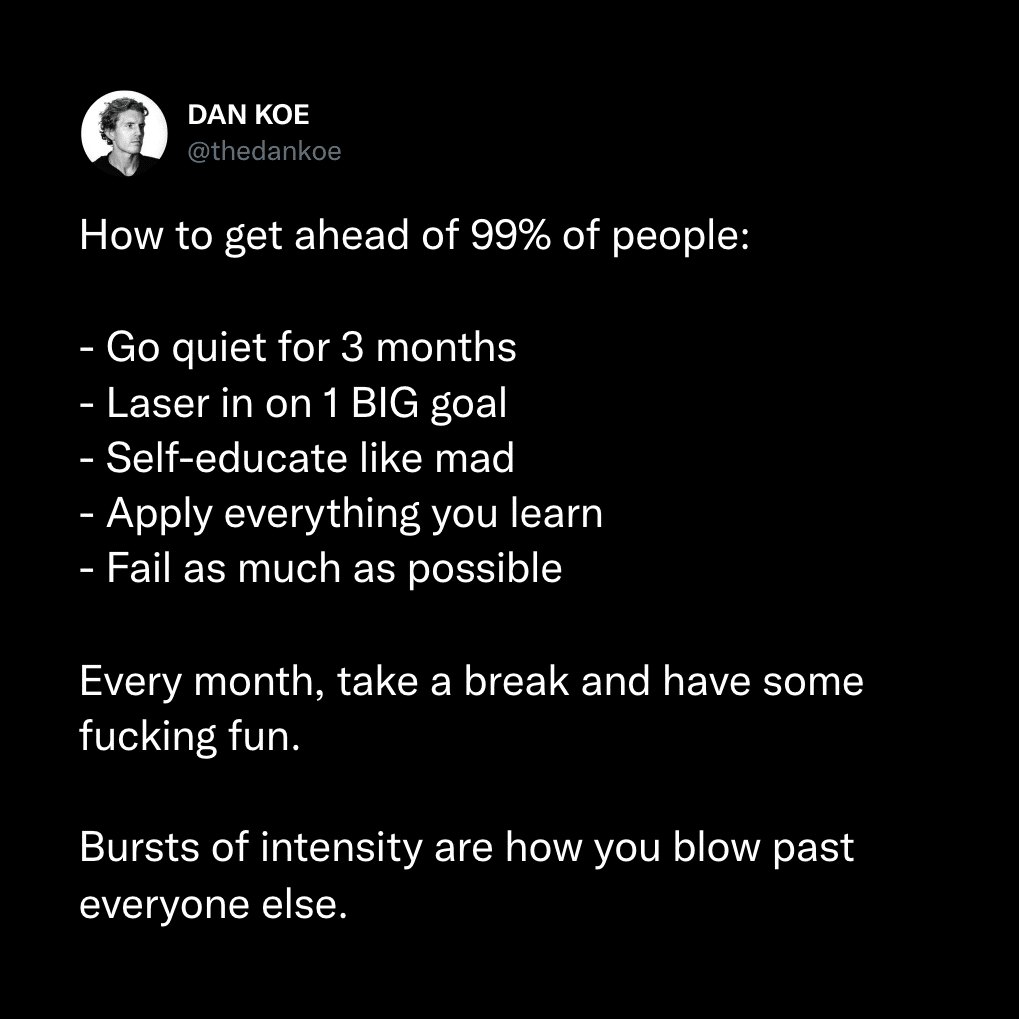
1) Specific Numbers

Using numbers in your hooks, headlines, or tweets will make people stop to see what the numbers relate to.

These can be in the form of:

The more specific the number is, the more it catches people’s attention.

If you can’t make it super specific, that’s fine. Don’t stress it.

Here’s an example from me that was the deciding factor in many people joining Digital Economics (my course):

2) Pattern Interrupts

A pattern interrupt is something that breaks people out of their normal conditioned patterns.

If someone is scrolling on X and is used to a lot of political commentary, a well-formatted list tweet will make them stop their scroll.

Most of the things in this list are pattern interrupts.

3) Negativity Bias

The human brain is wired to remember and pay attention to negativity.

This does not mean you have to be negative all the time.

It means you need to use the negative forms of words.

If you are saying something positive, but the point is better illustrated in its negative form, use that.

“You are going to achieve great things.”

Compared to:

“You will never hit rock bottom again.”

The second is most potent. We remember negativity. It is the most relatable aspect of many people’s lives.

It can still be a positive message while leveraging the reader’s negativity bias.

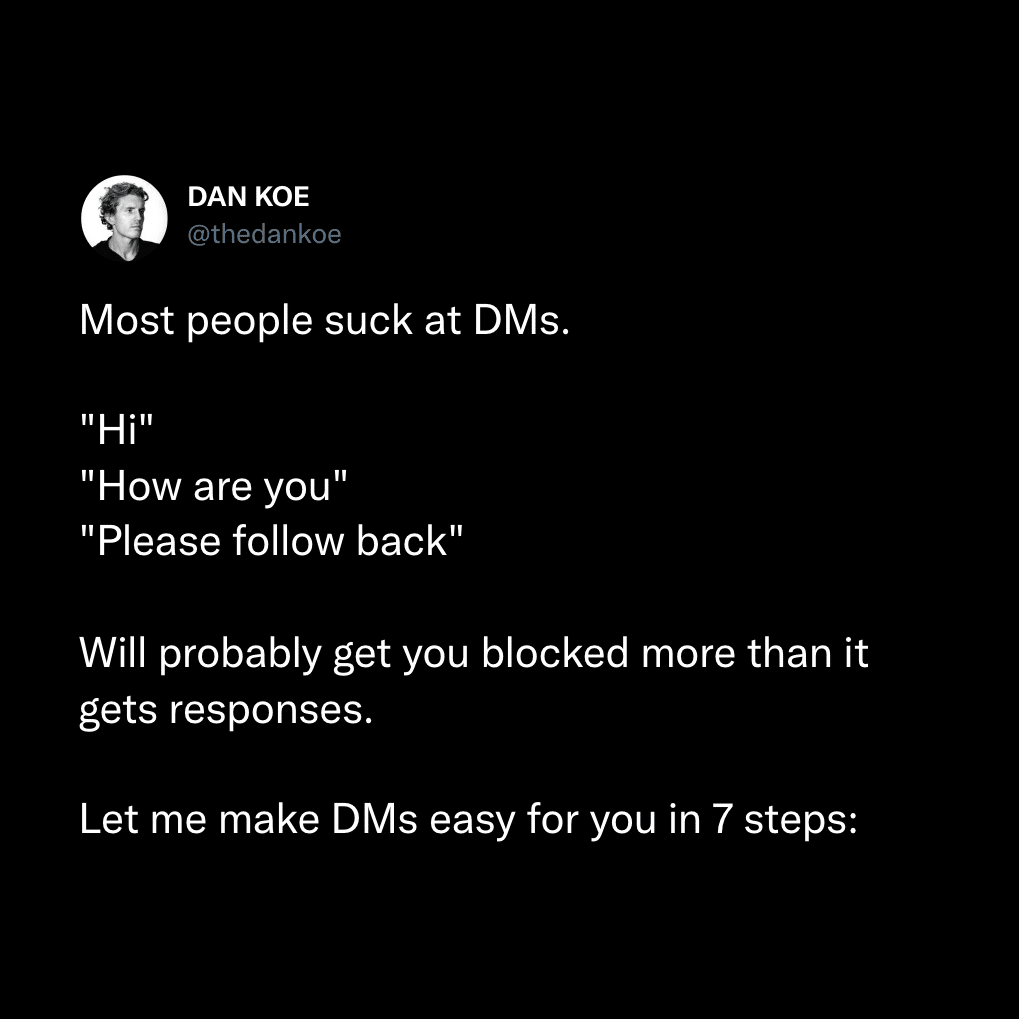
4) Group Callout

This is simple, call out the specific person you are talking to.

Even if your audience doesn’t fall into the specific group you are calling out, it will allow them to “pick a side” and compare themselves to what you are saying.

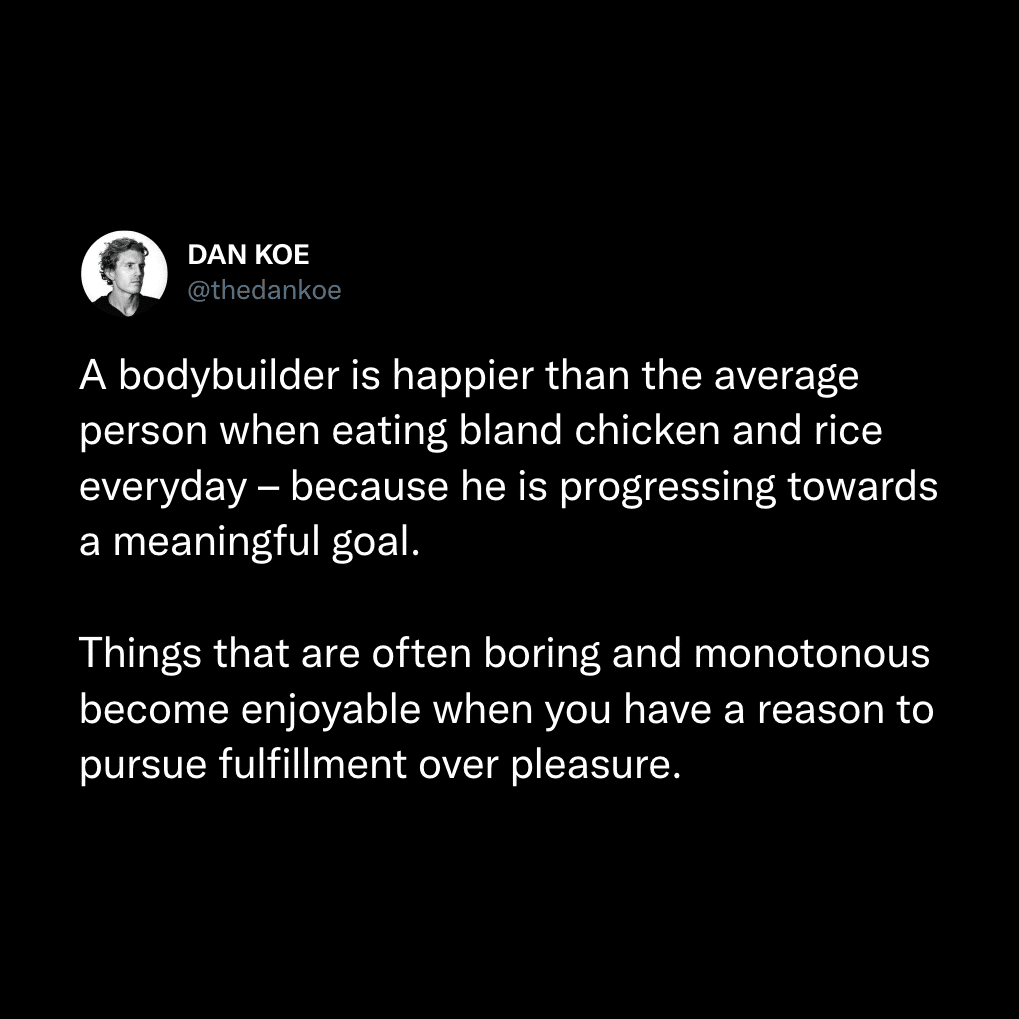
I talked about bodybuilders the other day. Even if people don’t consider themselves one, it helps paint a picture that they can relate to:

If someone talks about being a father, I can still relate because I will be a father one day. I will still pay attention to and take the advice.

This also works when it comes time to promote. You can call out exactly who the promotion is for and paint a picture of the problems they are struggling with.

5) Problem Callout

Calling out the pains or problems people are experiencing will also make them relate to the post.

MOST people have encountered the same problem or pain as everyone else throughout their life.

If you can describe the feeling accurately, you have attention at your fingertips.

You don’t have to be dead on with this. Simply describing pain points will have people trying to relate their experiences to it. If they can relate, they will engage.

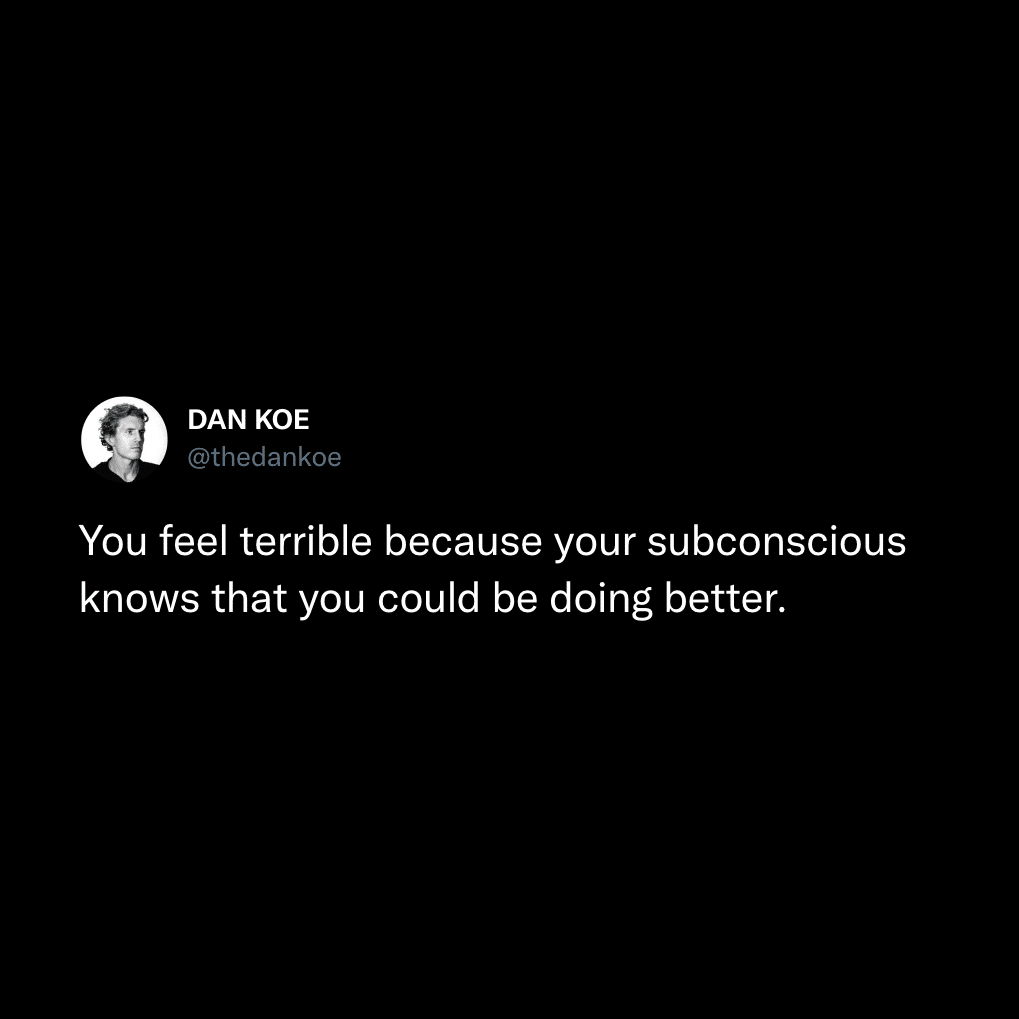
Here’s an example of calling out a pain as simple as “feeling terrible:”

6) Potential Benefit

The opposite of calling out a problem. Again, pains and benefits. Your mind needs to think in pains and benefits. That is your unique “why” behind whatever “what” or “how” you are writing about.

7) Social Proof

Again this is authoritative and implies an information gap.

When you flex your results or credentials, people automatically assume that you know more than them. They will take your content more seriously and read to find the information they are “missing.”

This works 100x better when it isn’t viewed as a “flex.”

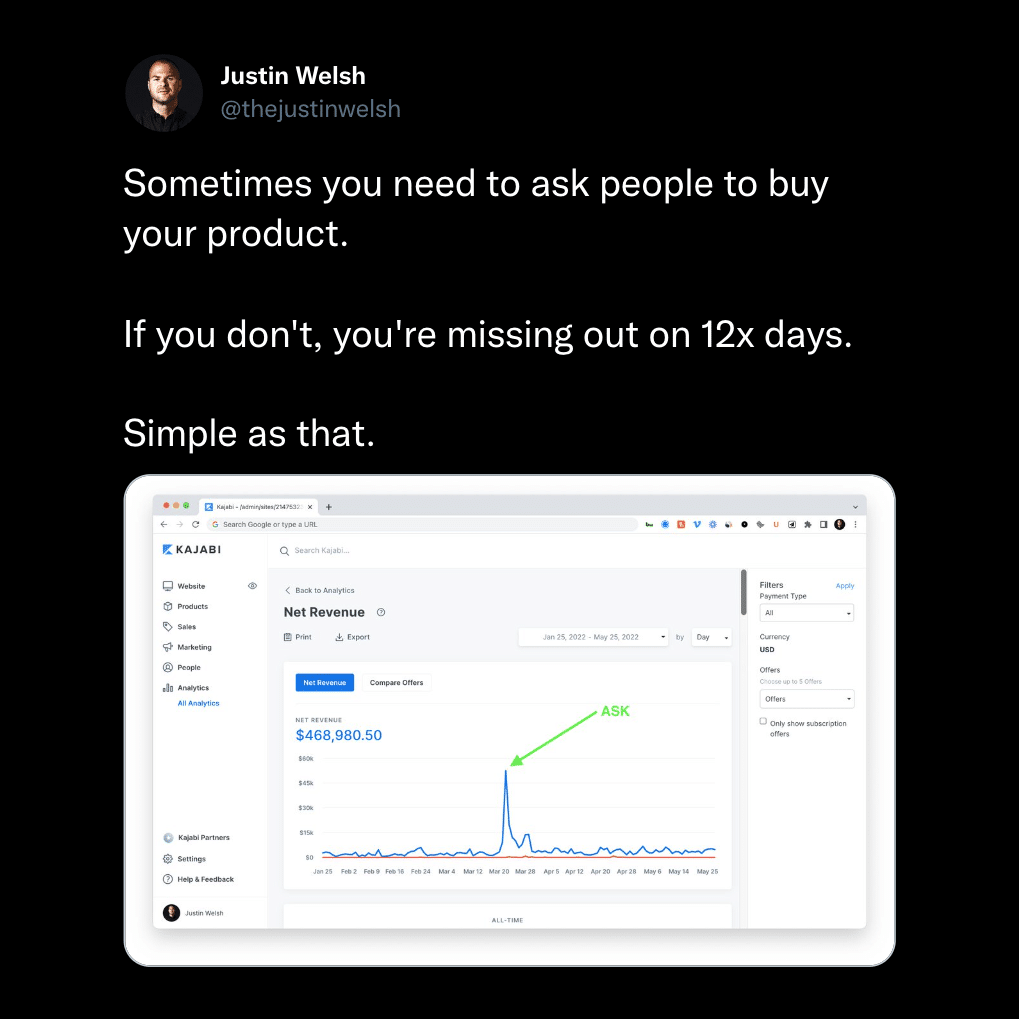
Justin Welsh is the current king of this:

Use social proof to illustrate a point you are trying to make.

8) Confidence & Conviction

This is by far the most important point here.

You can create highly impactful posts with confidence alone — it allows other aspects of attention-grabbing to fall into place.

You are right about everything at this very point in time in relation to your goals, vision, beliefs, values, and everything else that forms your perspective of reality.

Your job is to have confidence and conviction in your beliefs and a credible or clear argument to back them up (if you have to).

Everyone is on social media to be told what to do in a confident way. Nobody is secure in their actions, choices, and beliefs. They are looking for someone to confirm them with confidence and give them that clarity to act.

Tools you can use to sound more confident:

Of course, do not abuse these for the sake of engagement.

Rather than saying:

“It may be wise if some people developed their skillset.”

Say:

“It is crucial that everyone on planet earth develops their skill set.”

Just by being confident, the words flow easier and the writing is more impactful.

I can go on to back that argument up with statistics or more creative firepower that I have in my mind.

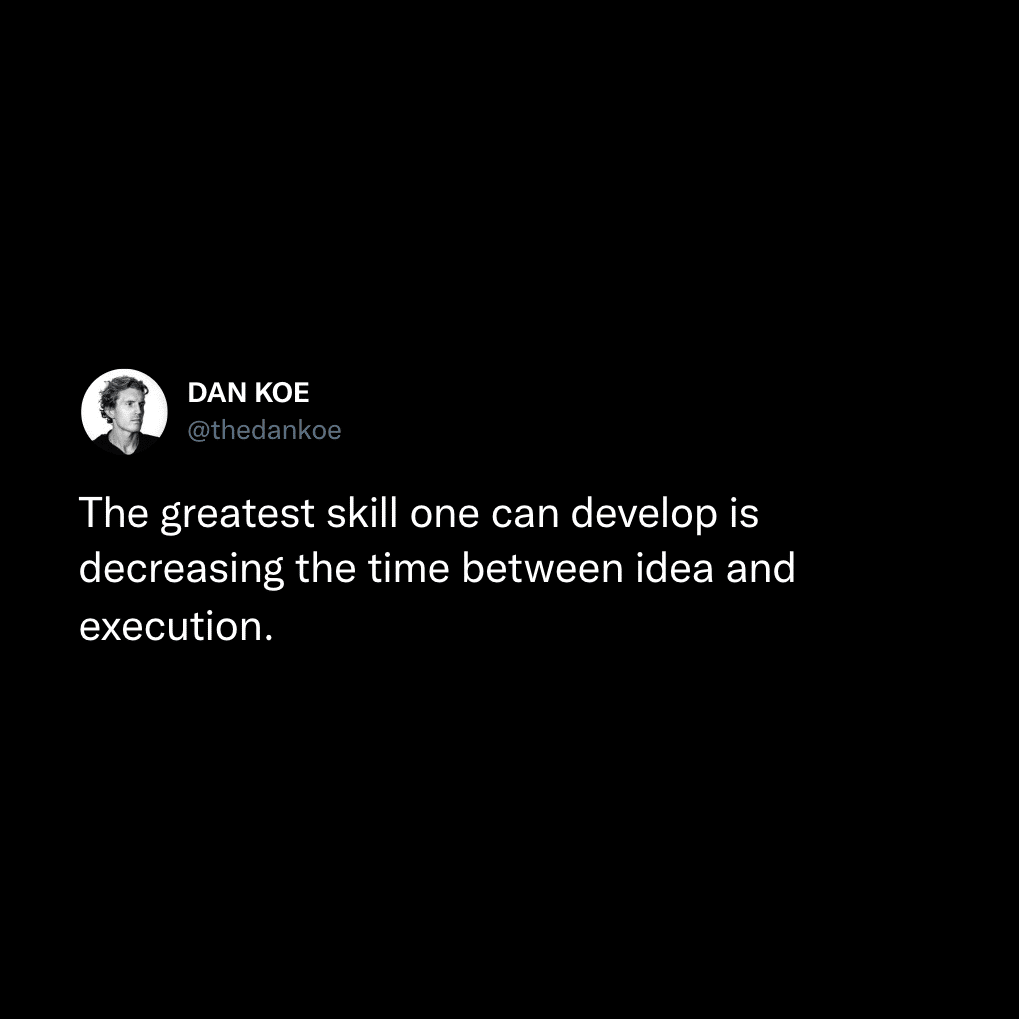
Here is an example of me being confident in what I was saying:

This tweet got featured in a big newsletter and sparked a lot of controversy.

People were arguing whether or not it was the “greatest” skill. Some were proposing what their greatest skill was.

This made people comment and quote tweet, leading to more engagement and impressions.

I wrote this tweet in the moment when I had executed on an idea quickly. Doing that gave me a lot of joy, so I wanted to share that joy with others. It worked.

Is it 100% correct? No.

Was it 100% correct when I wrote it, through my perspective, relating to my personal experience?

Yes. At the time I was 100% convinced that that was the greatest skill.

I went on to add nuance in the replies. If I had added nuance in the actual tweet, it wouldn’t have done as well and opened up the opportunity to be featured in a big newsletter.

The people YOU want to attract aren’t the people that “hate” on your work.

Here is one other — a bit more extreme — example. Can you sense the motivational and practical energy “flowing through the screen?”

By the way, these types of high-energy advice posts pull in quite a bit of followers.

In summary — have some conviction behind what you are saying. This is not a skill that needs to be trained. It’s just a matter of writing the words in the most impactful way. Leaders don’t dance around the point they are trying to get across.

9) Active Voice

Active voice implies that there is a story. It eases people into what you are saying.

Passive voice is often boring and gives away the “mini-story” too early. There is no anticipation that makes people want to figure out what happened next.

When you are practicing writing posts, look up an article on active voice and use it to edit until you get the hang of it.

This also helps with being perceived as confident.

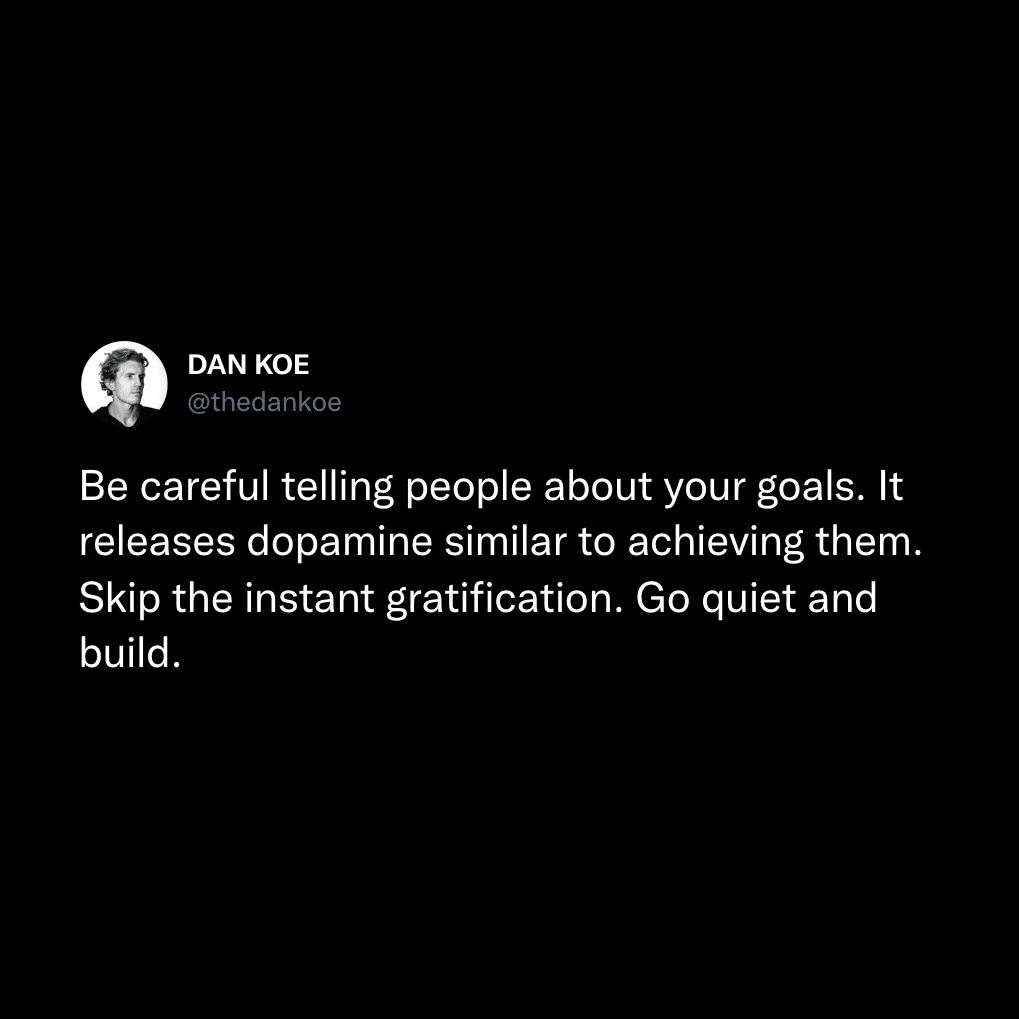
10) Warnings & Cautionary Advice

What should people look out for when they are trying to achieve something?

Can you warn them of something they will encounter as they are trying to reach where you are now?

When you are doing your weekly reflection, or just reflecting on your life, what roadblocks can you help people navigate?

This is best illustrated with this tweet. I hit on a hot topic like dopamine and warned them of another hot topic (then wrapped it up with confidence).

This sparked a LOT of controversy, but I have research to back up that point AND gave nuance in the replies to build a deeper connection with my audience:

What Holds Attention?

Once the curiosity loop is opened, the mind feels committed to figuring out the rest of the story.

That is what holds attention — crafting a compelling story.

Stories are layers of metaphors, concepts, perspectives, and experiences that take people on a journey.

People want to understand the entire story. They want to know what came before, during, and after any given event (from capturing attention).

Here are 2 things to keep in mind when it comes to holding attention:

1) Structure

We aren’t in high school anymore. Long, professional paragraphs don’t matter and reduce readability. Especially on X — people log on to that platform to escape the professional world.

How do you improve the structure of all of your content?

Here is an example of all of the above in one hook:

2) Novel Perspectives

This requires you to get the bulk of your ideas from books, podcasts, or other longer-form content that gives more nuance to certain ideas.

Novelty increases dopamine levels in the brain. It brings more clarity to an idea that has been talked about over and over.

If you are getting all of your content from Twitter while trying to grow on Twitter — you will probably end up with the same perspective as everyone else.

Metaphors, personal experiences, and creating new concepts is how you achieve this.

This will be our prime focus in future modules, so hold tight on this for now (but keep it in mind so you can start making connections as you consume).

I was reading an article, learned about how a glass of water can create an acre of fog, and applied it to one of my sub-topics — mindfulness.

Content consumption (or research) is important. Specifically books, audiobooks, podcasts, or articles. Those will give you different perspectives on the things you love talking about.

What Creates Engagement?

Remember: People don’t remember what you say, they remember how you make them feel.

Alan Watts may have been an alcoholic in his later years and cheated on his wives — which I have my own opinions about — but his work has changed my life for good. It gives me inspiration, clarity, and a new outlook on life.

I may remember some quotes of his, but the reason I remember them is because of the clarity they gave me. The feeling of having zero worries in the world. When I want to experience that again, I throw on an Alan Watts lecture.

YOU are but a humble messenger of a life-changing message.

1) The feelings that come from education.

Learning something new or gaining clarity on some aspect of their life raises dopamine levels in the brain.

You create clarity through novel perspectives, metaphors, stories, personal experiences, and other parts of your life that will help others understand what you are saying.

Your job is to “make sense” to a specific group of people.

You do this by sharing how certain topics make sense to you.

2) The feelings that come from inspiration.

Inspiration is different from motivation.

You are helping people connect the dots on their own, giving them the clarity to make their own decisions and change their behavior.

People feel good when they think they came up with the answer themselves — but will still attribute that feeling to you.

3) The feeling that comes from entertainment.

Can you throw in a joke, meme, or interesting point of view?

When you watch a movie, you are entertained through humor, drama, emotional parts of the story, and battles that spark excitement in you.

Entertainment, education, and inspiration are the main goals of your content.

I hope you enjoyed this one.

If you want to become a digital writer who controls the outcome of their life through the internet, check out read more in the Digital Writer series.

Dan Koe

— El que em quedo —
4 min · íntegre

carlosazaustre.es · Carlos Azaustre · ES · text complet des del seu blog · 927 paraules · 5 figures

Guardada · diumenge 5 abril 2026 · read-later · el mateix diumenge que la peça del final

Mi segundo cerebro: una wiki que la IA mantiene sola

La idea viene de una reflexión de Andrej Karpathy sobre el uso de LLMs. La mayoría los usa para buscar información. Yo quería algo distinto: usarlos para mantener una base de conocimiento personal que crezca y se corrija sola.

AAndrej Karpathy@karpathy𝕏

LLM Knowledge Bases

Something I'm finding very useful recently: using LLMs to build personal knowledge bases for various topics of research interest. In this way, a large fraction of my recent token throughput is going less into manipulating code, and more into manipulating…

April 2, 2026

El resultado es una wiki en Markdown que la IA actualiza automáticamente cada vez que guardo un bookmark, un post de LinkedIn o una nota de voz.


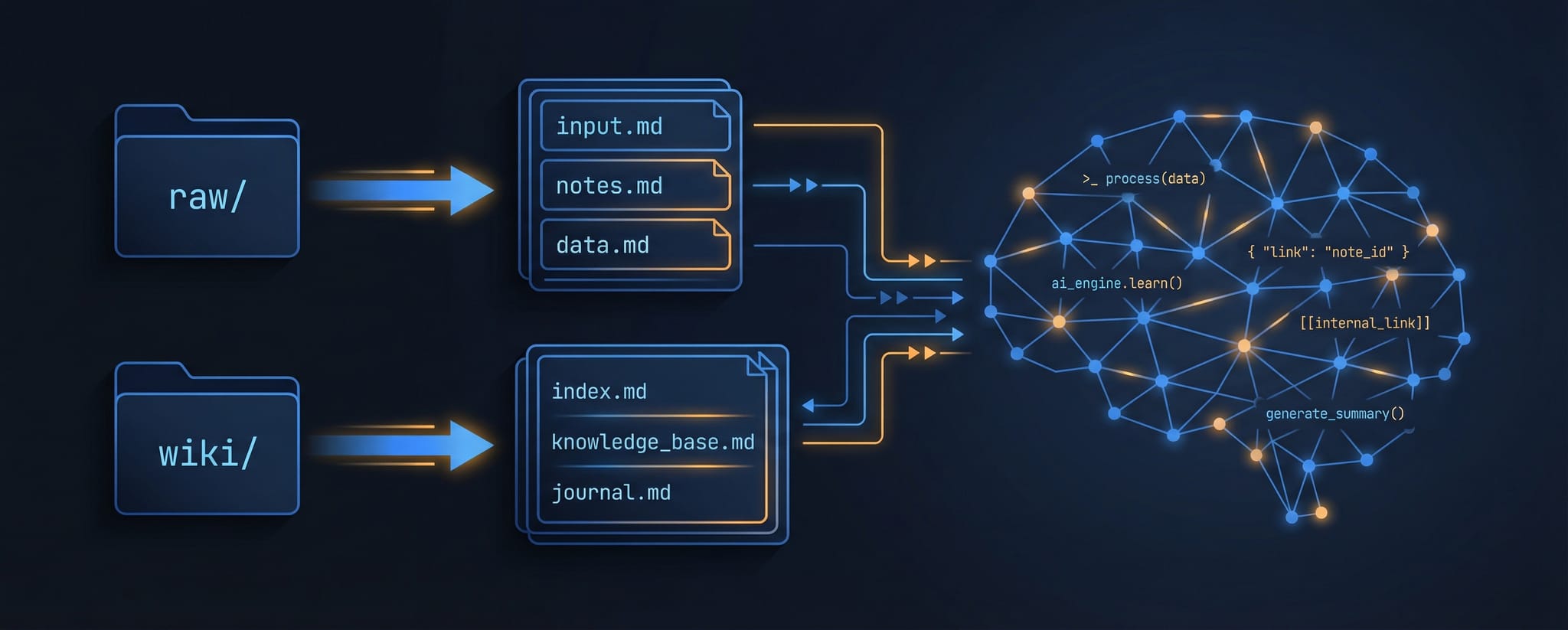
La estructura del sistema

Dos carpetas. Nada más.

La idea es sencilla: todo lo que entra va a raw/. La IA lo procesa, extrae lo relevante y actualiza el artículo correspondiente en wiki/. Si no existe el artículo, lo crea. Si ya existe, añade contexto o corrige lo que haya cambiado.

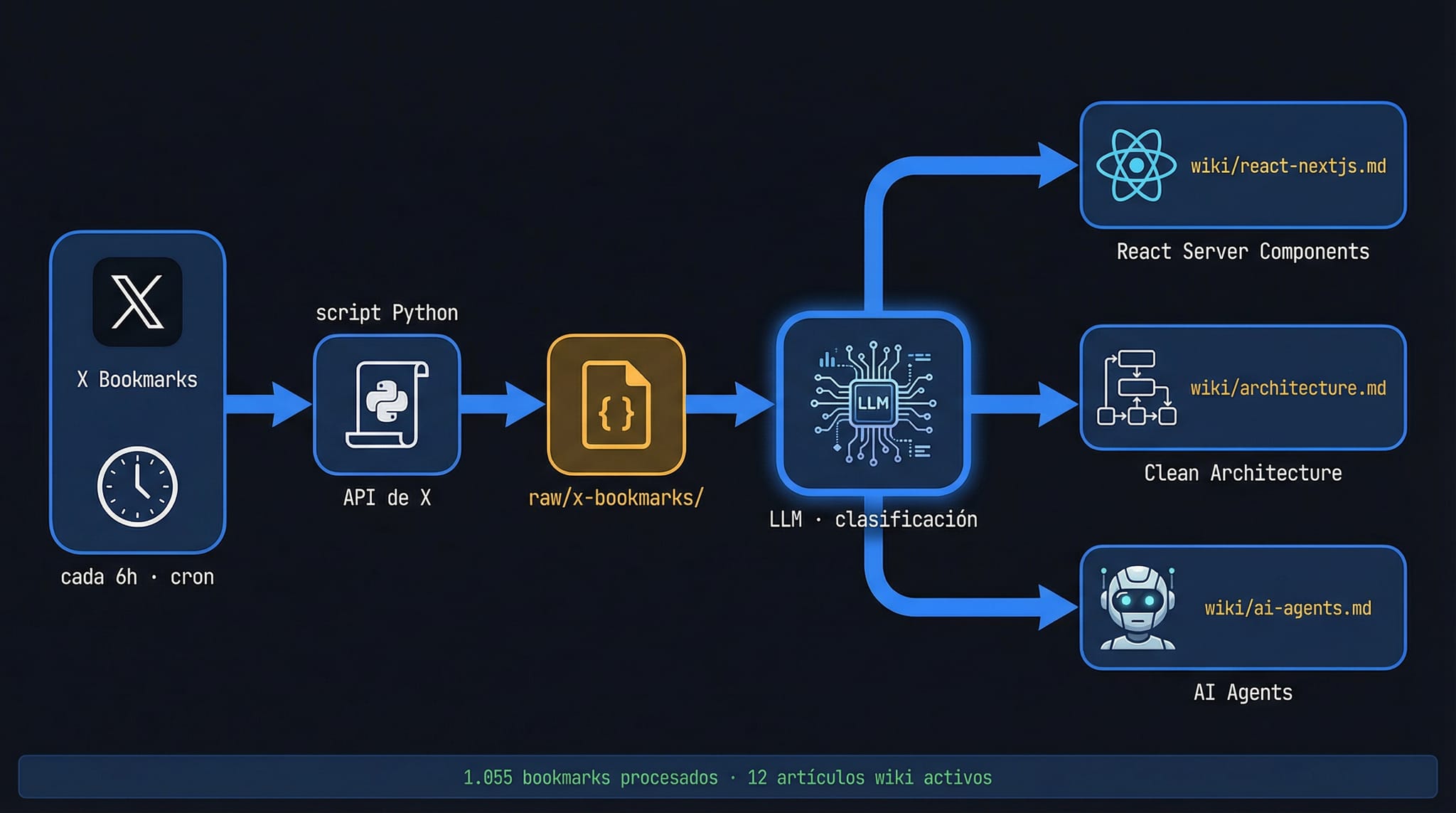
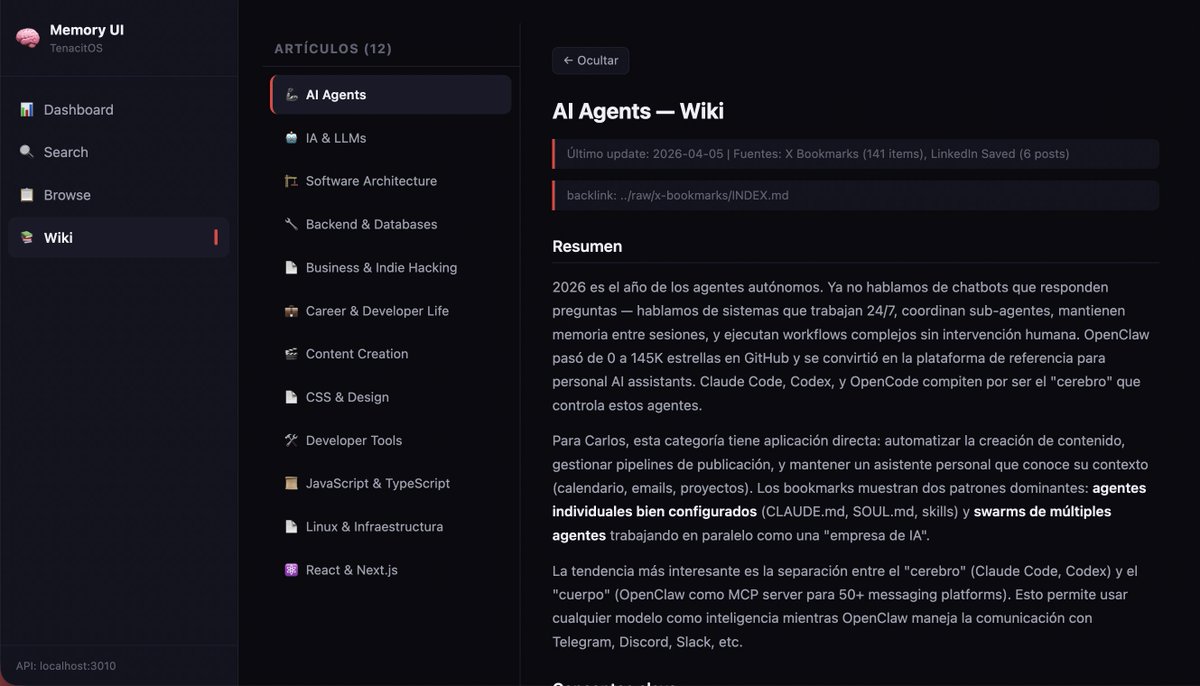
El resultado actual: 12 artículos activos cubriendo las categorías en las que me muevo profesionalmente.


Tres fuentes de ingesta

1. Bookmarks de X (cada 6 horas)

Un script Python sincroniza automáticamente mis bookmarks de X vía API. El LLM los clasifica y añade cada uno al artículo wiki correspondiente, con contexto sobre por qué ese recurso es relevante.

El resultado concreto: 1.055 bookmarks procesados en 12 artículos activos.

No es una lista de enlaces. Cada recurso tiene explicación de qué aporta y cómo se relaciona con el resto del contenido del artículo. Un bookmark sin contexto vale poco. Con contexto se vuelve útil.

2. LinkedIn Saved Posts (cada domingo)

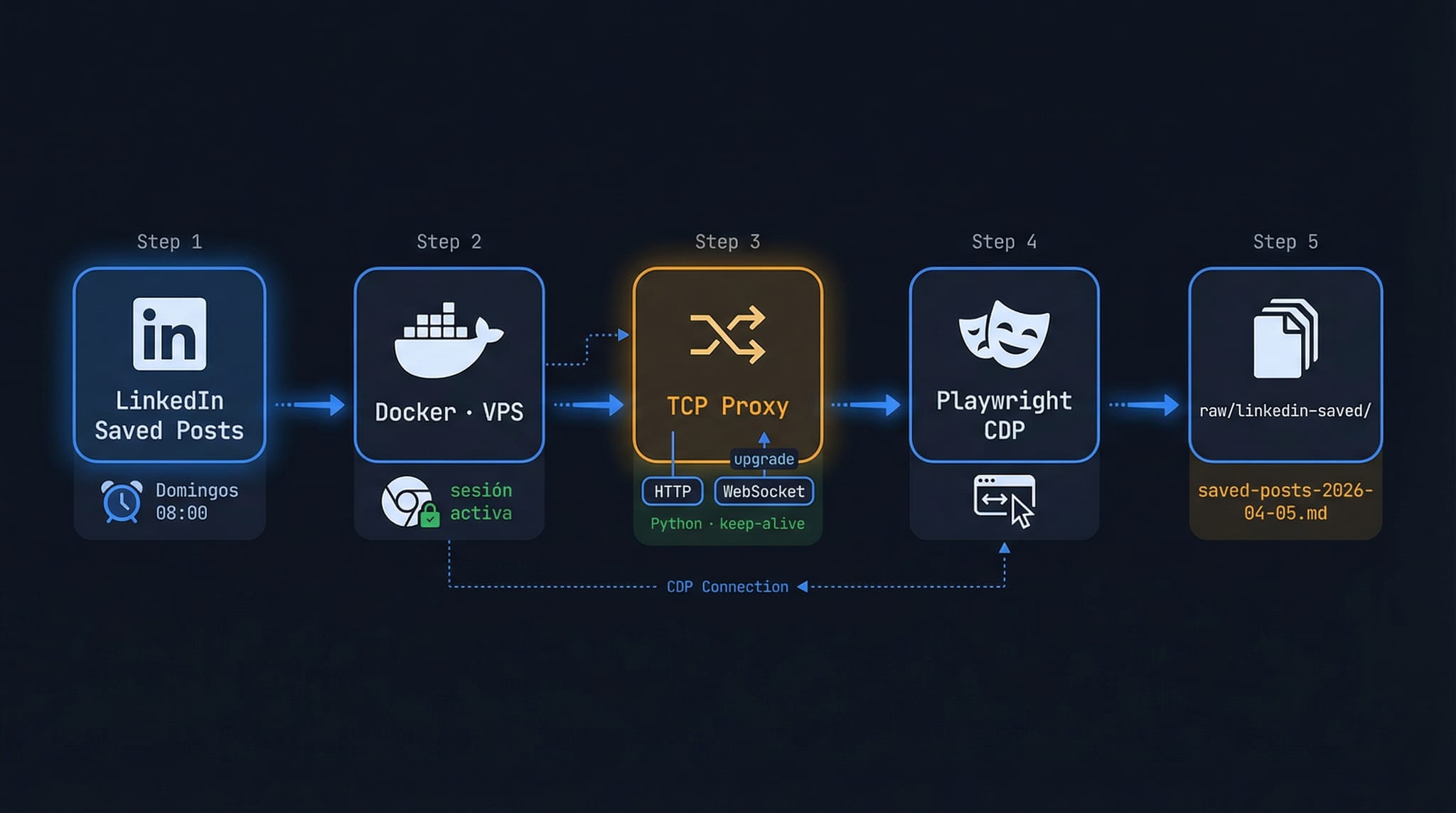
LinkedIn no tiene API oficial para posts guardados, así que la solución es un poco más artesanal: Docker con Chromium y Chrome DevTools Protocol. Playwright automatiza el navegador desde dentro del contenedor, extrae el contenido de una sesión autenticada, y lo pasa al pipeline de ingesta.

No es la solución más elegante, pero funciona. Y al correr en Docker, no interfiere con nada local.

3. Notas de voz (bajo demanda)

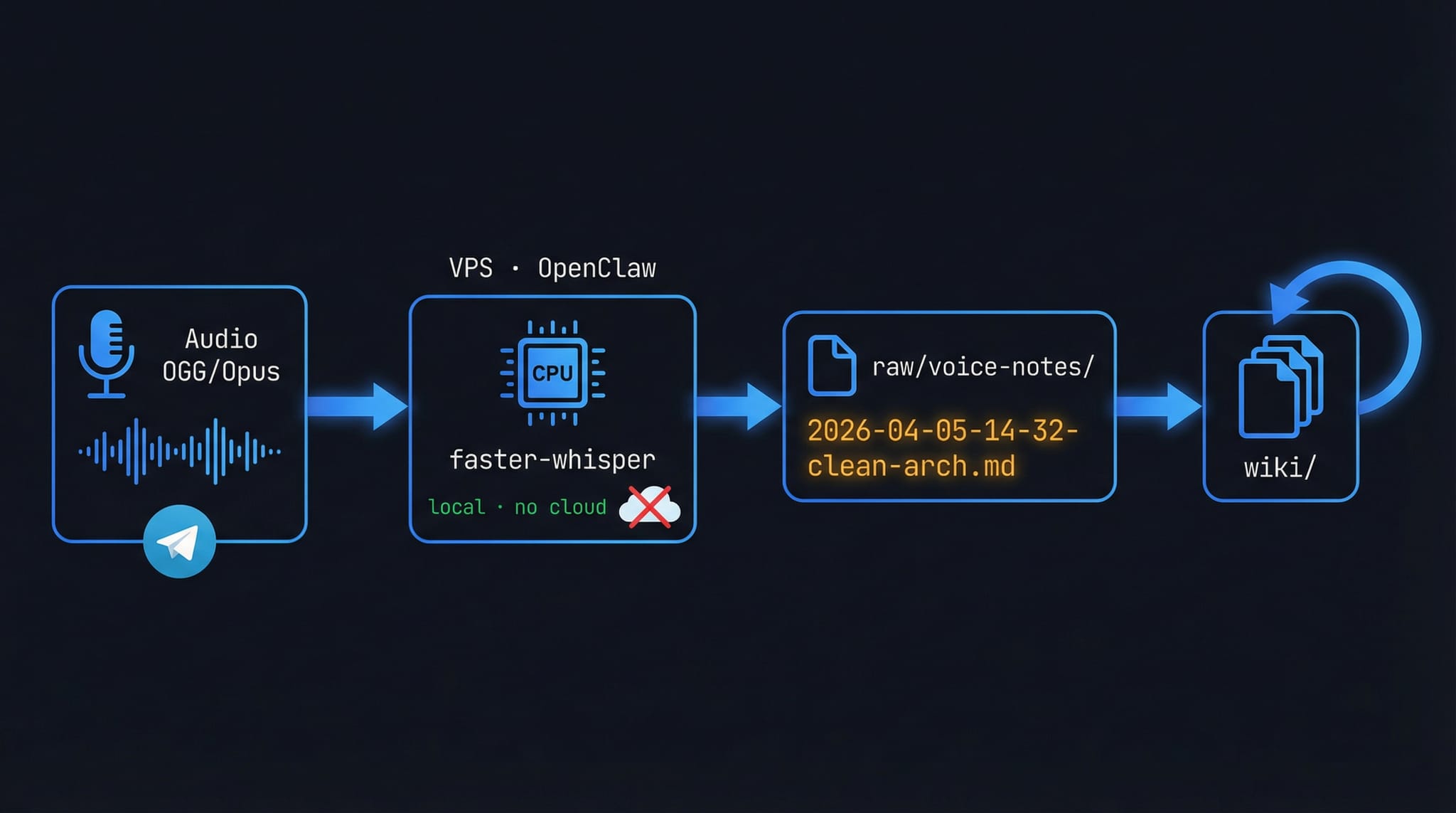
Las notas de voz se envían por Telegram. Un agente las recibe, las transcribe localmente con faster-whisper, las categoriza y actualiza el artículo wiki correspondiente.

El flujo completo ocurre en local: sin APIs externas de transcripción, sin datos enviados a ningún servicio de terceros.


Lo que hace que el sistema no se degrade

El mayor riesgo de un sistema así es que los errores se acumulen. La IA añade algo incorrecto, nadie lo corrige, y con el tiempo la wiki está llena de afirmaciones dudosas o contenido duplicado.

Dos mecanismos automatizados evitan esto:

Health checks mensuales: un script revisa cada artículo en busca de contradicciones internas, afirmaciones sin fuente y temas mencionados recurrentemente que deberían tener artículo propio pero no lo tienen.

Linting semanal: detecta duplicados entre artículos y sugiere reorganizaciones cuando una categoría ha crecido demasiado y empieza a perder coherencia.

Ninguno de los dos corrige automáticamente. Generan un informe que yo reviso. La IA sugiere, yo decido.


El feedback loop

Hay un principio que aplico en todo el sistema: todo output generado debe propagarse de vuelta a la wiki.

Si escribo un artículo para el blog, las ideas que usé y las fuentes que consulté deben quedar reflejadas en los artículos wiki correspondientes. Si genero código con un agente, el patrón o la técnica que funcionó debe registrarse.

Los templates de trabajo incluyen un campo explícito: ¿qué artículos de la wiki se actualizaron con esto? Si no se puede responder esa pregunta, el output no está completo.

Es lo que diferencia un sistema de captura de un sistema de aprendizaje.


Las categorías actuales

Los 12 artículos activos cubren:

La granularidad importa. Demasiado amplia (un solo artículo de "tecnología") genera documentos inmanejables. Demasiado específica (un artículo por librería) crea confusión y duplicados. 12 categorías es el equilibrio que funciona para mi caso de uso.


Lo que aprendí construyéndolo

La síntesis importa más que el almacenamiento. El valor no está en tener los bookmarks guardados, sino en tener el contexto de por qué ese recurso es relevante y cómo encaja con lo que ya sabes. Eso es lo que la IA añade.

La fricción de ingesta determina si el sistema se usa. Si guardar algo requiere más de un paso, no se hace. Los tres canales de entrada (bookmarks automáticos, scraping semanal, nota de voz por Telegram) están elegidos precisamente porque tienen fricción mínima.

El mantenimiento no puede ser manual. Los health checks y el linting existen porque si el sistema necesita revisión manual constante, acaba abandonado. La IA hace el trabajo de auditoría; yo solo leo el informe cuando quiero.


El sistema lleva varios meses en producción y sigue creciendo. No es perfecto, pero es el primero que realmente uso de forma consistente. Y eso, para un sistema de gestión del conocimiento, es lo único que importa.

— El que em quedo —
5 min · cluster

Cluster de tres veus · X · EN · posts complets

Tres sistemes que també ets tu: energia, cos, decisió

Sistemes humans

@bluewdrift

Guardada · dijous 9 juliol 2026 · entre 11 peces aquell dia

the real reason you're tired all the time: it's not your workload. it's your open loops. the text you haven't answered. the apology you owe. the decision you're avoiding. the conversation you keep postponing.

these run in the background of your mind all day, draining your battery. close your loops. watch your energy return.

mental clutter is more exhausting than physical work ever will be.

@joseph_tsar_

Guardada · dilluns 6 juliol 2026 · un dels 4 guardats sobre el cos aquell dia

Your posture shapes your voice. There is such a thing as better posture for speaking. The less unnecessary tension your body carries, the more freely your voice can move.

The neck, shoulders, and hips are where much of that tension lives. When they become rigid, your posture collapses, your breath shortens, and your voice loses calmness and confidence.

@RianSweetDoris

Guardada · dilluns 6 juliol 2026 · el mateix dilluns que l'anterior

Procrastination is "I know I need to do it, but I can't bring myself to start." Ambivalence is "I'm not sure I should do this at all."

You want to overcome procrastination. You want to pay attention to ambivalence — it may be trying to tell you something important. And you want to avoid mixing them up.

— El que em quedo —
1 min

X · @gregisenberg · EN · post complet

Guardada · diumenge 5 abril 2026 · read-later · el mateix diumenge que «Mi segundo cerebro»: dos second-brains en un dia

Obsidian: 350 milions i 3 enginyers

Obsidian is a $350M company for a note taking app built by 3 engineers working remotely.

No other tool comes close.

— El que em quedo —
El descàrrec
El que no va entrar

…i està bé així

Del pool de 30 candidats en van entrar 9. Això queda aquí perquè la culpa mori en aquesta pàgina, no dins teu.

Dades curioses · el teu cicle en números
La teca del registre

El teu backlog, en números

Information, Finished
Information,
Finished.
1.049 guardats · 9 rescatats · 0 culpa — estàs al dia del que importa.
Llegit el
El que em quedo d'aquest número
Glossari de fonts · després del check
Qui és qui, i d'on surt cada peça

Glossari de fonts del cicle 000

PeçaAutor · fontGuardada
Compounding com a avantatge injust@thebeautyofsaas
x.com/i/status/2071694325906309578
30 jun 2026
How I Unlock Insane Focus On DemandDan Koe
thedankoe.com/letters/my-1-million-productivity-framework-the-4-hour-workday
1 mar 2026
Respir@AlexHormozi
x.com/i/status/2072323819596050705
3 jul 2026
The Greatest Skill Of The 21st CenturyDan Koe
thedankoe.com/letters/the-most-important-skill-of-the-21st-century-only-1-use-it
5 jul 2026
Mi segundo cerebro (wiki + IA)Carlos Azaustre
carlosazaustre.es/blog/mi-segundo-cerebro-wiki-ia
5 abr 2026
Sistemes humans (cluster)@bluewdrift · @joseph_tsar_ · @RianSweetDoris
x.com/i/status/… 2075058629301198853 · 2073999757974921679 · 2073862932040134836
6–9 jul 2026
Obsidian: 350M i 3 enginyers@gregisenberg
x.com/i/status/2040746181559501302
5 abr 2026

NOTES FINALS · cap peça d'aquest cicle duia aparell acadèmic (citacions o bibliografia); quan n'hi hagi, viurà en aquesta secció. · Les dues cartes de Dan Koe es van llegir des de la seva font original oberta; al teu registre hi eren via X.

PAPER · VOL. 000 · fet a mà per al seu únic lector · juliol 2026